

Our drinking water is safe and clean
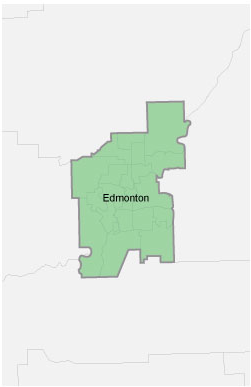
We take pride in providing safe and clean drinking water to Edmonton and surrounding areas. Our water quality lab tests for hundreds of parameters, which helps to ensure safe, reliable and high-quality drinking water for our customers.
There are no measurable levels of lead in drinking water when it leaves our water treatment plants. However, there is potential for lead to get into tap water in homes and businesses with lead service lines or from lead-containing plumbing fixtures.
Who is potentially impacted by lead in drinking water?
Exposure to lead can be harmful to health, especially for pregnant women and young children. More information on the health effects of lead in drinking water can be found on Health Canada’s website, including this resource regarding lead in drinking water.
According to Health Canada: “lead service connections (lines) were installed in drinking water systems in many countries, including Canada. Widespread installation of lead service lines occurred in Canada until 1975. Additionally, the use of solder containing lead for new plumbing and in repairs to plumbing continued until 1986. As a result, plumbing and distribution system materials can be an important source of lead in tap water of homes built prior to the 1990s (Health Canada, 2009b). Lead may be found in brass and bronze fittings, such as faucets and valves, and fixtures.(U.S. EPA, 2006b).”
Our lead management initiatives
We care about the health and wellbeing of our customers, and we take several steps to help protect Edmontonians from the harmful effects of lead. Since 2008, we have implemented several lead management initiatives to ensure Edmontonians who’s water service is provided through lead pipes have good water quality, this includes the addition of Orthophosphate to the water.
Our lead program has evolved over the years as the amount of lead pipe within Edmonton is reduced, and we continue to educate customers and provide advice on how to maintain high water quality for homes with a lead service line. This includes offering free annual water testing for customers with lead service lines and providing free NSF-53 certified water filters upon request.
Together, with the support of the City of Edmonton, our aligned lead mitigation strategy seeks to:
-
Educate customers and provide advice on how to maintain good water quality when you have a lead water service line.
Avoid partial lead service line replacements, as replacing only one section of a lead service line can temporarily increase lead levels. When partial replacements are required on the EPCOR portion of the water service line, we notify customers in the area.
Uphold standards for new infill development to work with property owners to connect new water services. We do not support reusing lead service lines for redeveloped properties.
In 2019, Health Canada updated their Guideline Technical Document for lead in drinking water.
Homeowner responsibilities
A water service line is the pipe that connects your property's plumbing to the water main in the street.
- EPCOR is responsible for the portion of the service line running from the water main under the street or alley to the property line.
- The property owner is responsible for the portion of the service line running from the property line to the water meter in the home or building.
EPCOR has been proactively replacing lead water service lines since 2008.

How to tell if you have a lead water service line in your home
Here are a few indicators that you may have lead pipes.
- Your home was built prior to 1960 when lead was a material used by homebuilders for water service lines. Today, the preferred materials are copper and polyethylene (plastic tubing).
- When the utility's portion of the water service line is lead, it's often likely that your portion could be lead too. If you receive an annual notice from us, this means our records show the utility portion of your service line is lead.
Note: EPCOR does not maintain records for the homeowner's portion of water service lines.
If you're still not sure what your portion of the service line is made of, follow our 3-step process below or watch our video.
How to perform a scratch test for lead pipes
Step 1: Find your emergency water shut-off valve
Find your emergency water shut-off valve and inspect the pipe coming out of the ground and into the water meter.
Step 2: Check the pipe colour
Check the colour of the pipe coming out of the ground. You may have to lightly sand the surface of the pipe. If the pipe is:
- Shiny orange-brown, the colour of a Canadian penny: It's copper.
- Bright blue or black: It's likely plastic tubing (polyethylene). Important: Don't attempt to test the hardness of your pipe if you suspect it's plastic.
Grey: It's galvanized iron or lead.

Step 3: Determine the pipe material
If you think your water service line could be lead, try gently etching into the pipe. Lead is relatively soft metal and scratches easily. Do not attempt this if you think the line could be plastic.
Note: While these are all good indicators of whether your water service pipe is lead, every pipe is a little different. The only way to be sure if you have a lead service line is to have your water tested.
If you have, or suspect you have, a lead service line, EPCOR offers free annual water testing and a free NSF-53 certified water filter upon request. To request these supports, please contact us at 780-412-6858 or leadmanagement@epcor.com.
 Notice the compression fitting used to attach a soft lead pipe to galvanized iron pipe.
Examples of what your water service line may look like


To inquire if your property has a lead water service line, if you are considering replacing your lead water service line, or you want to learn more about lead service lines, please contact us at 780-412-6858 or leadmanagement@epcor.com.
How to maintain good water quality when you have a lead service line
- Run your cold water tap for at least 3 minutes, or until it is cold, any time you haven't used the water for 6 or more hours if you are drinking or cooking with it. This flushing time can be reduced if combined with other water uses like flushing toilets, showering or running household appliances like the dishwasher or washing machine.
- Install a water filter or in-premise filtration system that is NSF-53 Certified for lead reduction. These can be found at most home improvement stores and are more cost effective than purchasing bottled water. If you have a lead service line, EPCOR can also provide a free NSF-53 certified filter upon request. If you're using a water filtration system, follow the manufacturer's guidelines. Properly condition new filters before their first use and replace used filter cartridges as required.
- Replace in-home lead or brass plumbing fixtures. If you have plumbing fixtures, such as faucets that contain lead or leaded brass, consider replacing them with lead-free fixtures.
- Don't use water from your hot taps for drinking, eating, cooking or baking. Only consume water from your cold taps, then heat it up if needed.
- Take note of construction in your area. Following these water quality tips is particularly important if construction is occurring near your property, as ground disturbance has the potential to disturb the water service line and temporarily increase lead levels in your tap water if you have a lead water service line.