Welcome to EPCOR Our site is customized by location. Please select the region of your service and we’ll remember your selection for next time.
Select location

Our site is customized by location. Please select the region of your service and we’ll remember your selection for next time.

Change a country
Country Flag Canada
Country Flag United States

Select a region for customized content and rates

Mouse hover over any region to see the map here
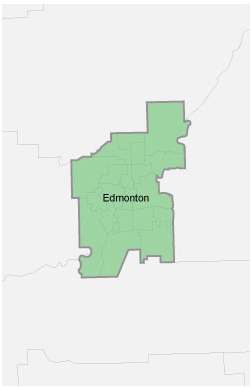
Edmonton
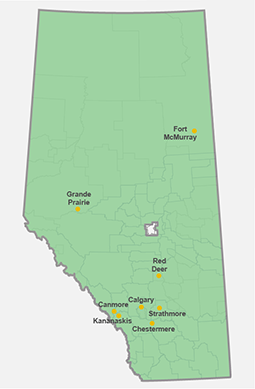
All Alberta locations except Edmonton
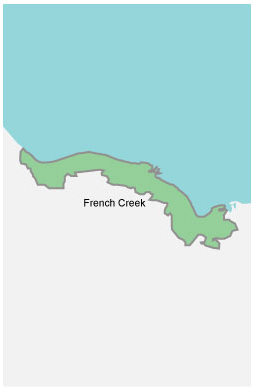
French Creek
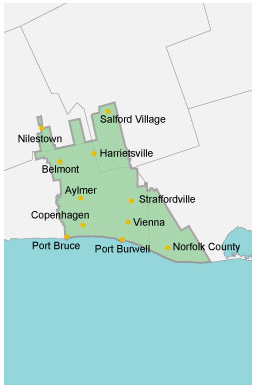
Aylmer and area
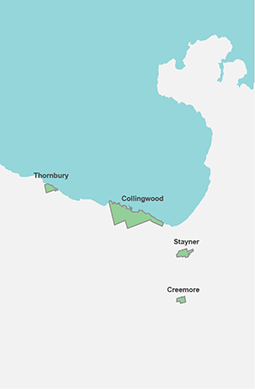
Collingwood and area
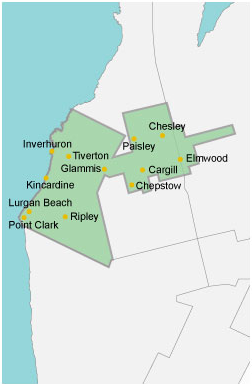
Kincardine and area
Select a state

Looks like you're in Canada

Looks like you're in the United States

Change country
Country Flag Canada
Country Flag United States

Select a region for customized content and rates

Mouse hover over any region to see the map here
Edmonton
All Alberta locations except Edmonton
French Creek
Aylmer and area
Collingwood and area
Kincardine and area

Select a region for customized content and rates

Select a region for customized content and rates

Choose your location
To view this page, set your location to:
Country Flag Country Flag
This page doesn’t match your location
To view this page, you must change your location to:
Country Flag Country Flag
Choose your location
To view this page, you must set your location to:
Country Flag Country Flag

Rain gardens and box planters

Create a lush, flood-ready landscape with a rain garden through to collect and filter stormwater. Helping to safeguarding your property and contributing to the health of the North Saskatchewan River.
Rainwise logo
On this page

What is a rain garden?

A rain garden is a shallow, depressed garden with specially blended soils designed to collect stormwater runoff from rooftops, driveways, and hard surfaces. Rain garden designs can include any combination of shrubs, grasses and flowers. It is recommended that selected plants are tolerant to both wet and dry conditions. The most important part of a rain garden installation is the loose, deep soil underneath that absorbs and filters stormwater.

Building a rain garden offers a beautiful, low-maintenance, practical approach to protecting your home, reducing costs and supporting the environment.

Vibrant residential rain garden filled with layered ornamental grasses, flowering perennials, shrubs, and small trees. The naturalized planting design supports stormwater absorption while enhancing the home’s curb appeal with rich textures and colours.
Box planter

What is a box planter?

Box planters are essentially rain gardens contained to box-like structures and can be built in a number of configurations (e.g. above or in ground, with or without a self-containing bottom). These planters often consist of a concrete (or other durable material) box filled with soil and plants. If the box planter is built from wood, an impermeable liner is recommended to prevent moisture damage. Box planters can look very different depending on where they are installed, and are a good option when space is limited because they have vertical sides vs. sloped sides.

How they work

Stormwater enters the rain garden or box planter through an inlet, like a downspout, and flows into soil and rock layers that capture and filter it. Special plants absorb the water, or it evaporates. During heavy storms, rain gardens and box planters can become full. For gardens without pipes, an overflow area is needed on the downhill side. For planters with pipes, water will flow into an overflow pipe when it gets too high and then drain out to a grassy area or drainage system.

Rain garden diagram example Rain garden example
In-ground box plater diagram example In-ground box planter example
An illustrated cross‑section of an above‑ground box planter used for stormwater management. The diagram shows rainwater entering from a downspout into a planter filled with mulch, native plants, and specialized LID soil. Arrows indicate water movement downward through the soil toward a perforated PVC pipe set above a rock layer and enclosed by a waterproof liner. An overflow pipe and outlet are also shown, demonstrating how excess water exits the system. Labels identify each component, including the inlet, mulch, native plants, overflow pipe, LID soil, perforated PVC pipe, waterproof liner, and rock layer. Above-ground box planter example

Benefits

  • Enhance the look of your property, boosting its value and curb appeal.
  • Encourage biodiversity by attracting birds, bees, butterflies, dragonflies and other species.
  • Help remove pollutants from stormwater.
  • Are low maintenance features that only require watering during extreme drought, saving money on your water bill.
  • Help prevent sewer backups and flooding during heavy rain by slowing down and reducing the amount of stormwater entering the drainage system.

Rebate eligibility and amount

Eligibility

  • Single-family residential
  • Multi-family residential
  • Industrial, commercial, and institutional

Amount

Note: The RainWise rebate program is not retroactive. Projects completed before the application is approved are not eligible for the rebates.

Requirements

To receive a rain garden or box planter rebate, the following conditions must be met:

  • Receive runoff from an impervious surface (e.g. roof).
  • Be constructed in such a way to prevent erosion.
  • Be constructed a minimum of three (3) meters away from building foundations.
  • The depth of the rain garden layers must be within the following specified ranges:
    • Ponding depth: 100-150 mm
    • Soil layer: 300-600 mm 
  • The depth of the box planter layers must be within the following specified ranges:
    • Ponding depth: 100-350 mm
    • Soil layer: 300-600 mm
    • Rock layer: min 300 mm 
  • Overflow to a permeable area (e.g. lawn).
  • Must be sized to manage at least 75% of the directly connected impervious area as calculated by the rain garden/box planter sizing tool.
  • Must not contradict the City of Edmonton Drainage Bylaw. Here is some relevant information from the bylaw related to the release of water:

    Roof and foundation drainage from a property is not permitted to be discharged:
    •  onto a pervious ground surface within one (1) meter of the building;
    • within 150 mm of an adjacent lot;
    • within 150 mm of a City of Edmonton right-of-way (ROW);
    • to a location where the water has the potential to adversely impact slope stability, unstable ground, a ravine; or
    • to a location or in a manner that causes or could cause nuisance, hazard or damage.

check_circle

Eligible rain gardens

Rain garden illustration diagram

Features of RainWise eligible rain gardens:

  • Sunken from surrounding ground to let water pool
  • Receives runoff from a hard-surface area* (like a roof)
  • Has a deeper soil bed (usually 30-60 CM)
  • Contains specially blended soil to allow for infiltration 
  • Plants tolerate wet or dry conditions
cancel

Ineligible rain gardens

Illustration of an ineligible rain garden

Features of a typical in-ground garden (not eligible for RainWise rebate:

  • Planted with decorative or edible plants (e.g. flowers, shrubs, vegetables)
  • Level/does not allow water to pool
  • Needs regular watering
check_circle

Eligible box planters

Box planter illustration diagram

Features of RainWise eligible box planters:

  • Has a deep soil layer of specially blended soil that allows for infiltration
  • Includes a rock storage layer below the soil layer
  • Contains a perforated drainage pipe running through the rock storage layer to move water out of the planter
  • Receives runoff from a hard-surface area* (like a roof)
  • Has an appropriately sized overflow pipe
  • Plants tolerate wet or dry conditions
cancel

Ineligible box planters

Illustration of an ineligible box planter

Features of a typical above-ground box planter (not eligible for RainWise rebate):

  • Planted with decorative or edible plants (e.g. flowers, shrubs, vegetables)
  • Does not have a perforated drainage pipe, rock storage layer, or overflow pipe
  • Needs regular watering

Make sure that you have all of the necessary photos and documents so that we can efficiently process your application and claim.

View guidelines for filling out your application.

Application form requirements

Multi-family, industrial, commercial and institutional customers if available, please include:

  • Storm servicing plans
  • Lot grading plans

Claim form requirements

Photos:

  • Completed work
  • After excavation (not required for above ground planters)
  • Before surface restoration, if applicable. These photos must show installed underground/below surface components (e.g. rock layers) before they are covered with soil, plants, or other surface materials.

Keep all project related receipts. EPCOR reserves the right to request project-related receipts for all RainWise projects to verify project completion and ensure program compliance.

How to calculate the size of your rain garden or box planter

Example project: disconnect one downspout and create a rain garden
A property located within the downspout disconnection eligibility area is planning to disconnect one (1) downspout from its standpipe and redirect the flows from that downspout into a rain garden located in the front lawn.

  • The total roof area is 270 m2, but only half of this area (135 m2) is directed to the downspout being disconnected.
  • The planned rain garden area is 15 m2.
  • The total DCIA for the project is only 135 m2 because in this example the rain garden area is excluded from the DCIA since the area being replaced with the rain garden was previously pervious (grass).

In this case, the applicant would receive a maximum rebate of up to $1,585 (up to $100 for the one (1) disconnected downspout + $11 per m2 of 135 m2).

Resources

This site uses cookies to provide a better user experience and for advertising purposes. By using our website, you accept our use of cookies. Visit our Privacy Policy for more details.