Welcome to EPCOR Our site is customized by location. Please select the region of your service and we’ll remember your selection for next time.
Select location

Our site is customized by location. Please select the region of your service and we’ll remember your selection for next time.

Change a country
Country Flag Canada
Country Flag United States

Select a region for customized content and rates

Mouse hover over any region to see the map here
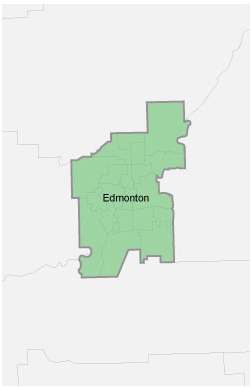
Edmonton
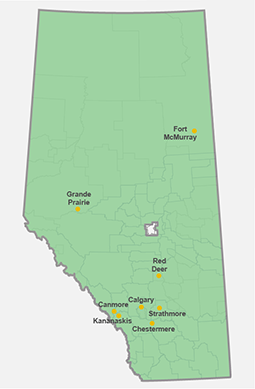
All Alberta locations except Edmonton
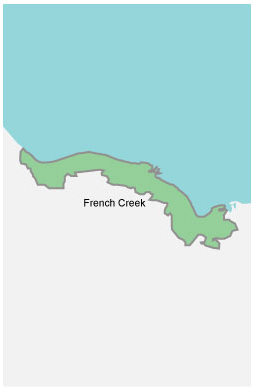
French Creek
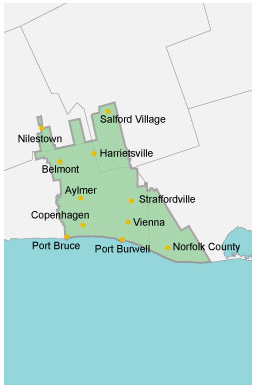
Aylmer and area
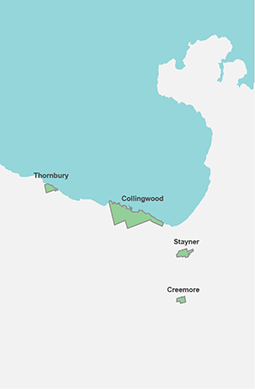
Collingwood and area
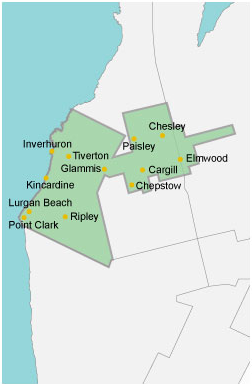
Kincardine and area
Select a state

Looks like you're in Canada

Looks like you're in the United States

Change country
Country Flag Canada
Country Flag United States

Select a region for customized content and rates

Mouse hover over any region to see the map here
Edmonton
All Alberta locations except Edmonton
French Creek
Aylmer and area
Collingwood and area
Kincardine and area

Select a region for customized content and rates

Select a region for customized content and rates

Choose your location
To view this page, set your location to:
Country Flag Country Flag
This page doesn’t match your location
To view this page, you must change your location to:
Country Flag Country Flag
Choose your location
To view this page, you must set your location to:
Country Flag Country Flag

Contact with power lines or electrical equipment

Knowing what to do when your vehicle touches electrical equipment can be life-saving. Learn what to do, when to stay in your vehicle, how to exit safely in an emergency and who to call for help. 

If you've hit or made contact with electrical equipment

If your vehicle comes into contact with electrical equipment, you should stop moving, stay in your vehicle to assess the situation, and call 911.

Electrical contact can happen in several ways, including:

  • A power line falling on a vehicle during a storm or collision.
  • Hitting a green electrical box or power pole. This is common in winter when roads are icy.
  • Driving over a downed power line, even if it isn’t sparking.
  • Equipment (like a digger, tractor, or loader) touching overhead or underground lines

Unless you’re in immediate danger (e.g. your car is on fire) the safest place to be is inside your vehicle until emergency crews arrive and confirm it’s safe to exit. 

If you witness a vehicle incident with electrical equipment, stay back 10 meters (the length of a school bus) and call 911.

Follow the steps below to assess the situation and stay safe.

Determine your situation

Review the following to know what to do next:

If there is an immediate threat and you must exit

Only exit your vehicle or equipment if there is an immediate threat, such as fire or heavy smoke. 

If someone tries to help, tell them to stay at least 10 meters back (the length of a school bus). It isn't safe to come closer and they could put both of you at risk.

How to exit your vehicle safely (jump clear method)

  1. Open your door carefully.
  2. Jump clear, landing with both feet together.
  3. Do not touch both the vehicle and ground at the same time.
  4. Shuffle away with both feet together and on the ground at all times. This protects you from “step potential”, dangerous voltage differences in the ground.
  5. Move at least 10 metres away from the vehicle. 
  6. Call 911 once you are safely away.
  7. Do not return to the vehicle, and keep others away. 

If you can safely move your vehicle

Only do this if your vehicle is not tangled in wires and you can clearly move away.

  • Slowly drive at least 10 metres away (about the length of a school bus).
  • Stop and call 911 to report the incident.
  • Keep yourself and others at least 10 metres away.

If you can't safely move your vehicle

If you’re stuck, tangled in wires, or unsure:

  • Stay inside the vehicle or cab.
  • Call 911 and give them your location.
  • Emergency responders will secure the area until EPCOR arrives.
  • An EPCOR crew member will open your door, tell you how to exit your vehicle safely, and what to do next.

Keep everyone at least 10 metres away.


How to help someone with electrical injuries

If someone has been shocked or burned, your first priority is to ensure your own safety.

  • Do not approach or touch the person until you know the source of electricity has been removed.
  • Call 911 right away to report the injury.
  • Only provide first aid if emergency responders tell you it is safe to do so. Electrical injuries often require immediate professional medical care.

Related safety information

bolt

Downed power lines

Know what to do and how to stay safe if you see a downed or low‑hanging power line.

warning

Safety around electrical infrastructure

Understand the electrical infrastructure in your neighbourhood, and how to stay safe around it.

construction

Safety at work

If you work around overhead or underground powerlines, we have tools available to help you work safely.


Disclaimer

This webpage provides information only. Any reliance placed on this information is strictly at your own risk. EPCOR does not assume any responsibility or liability for any action, loss or damage that arises out of, or is in connection with the information contained in this webpage.

This site uses cookies to provide a better user experience and for advertising purposes. By using our website, you accept our use of cookies. Visit our Privacy Policy for more details.