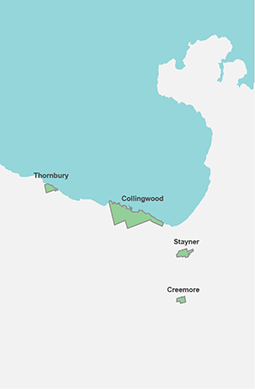
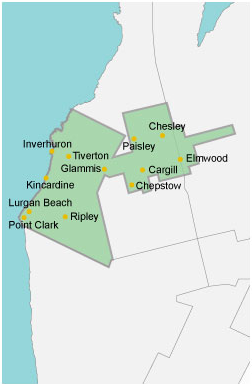
Our site is customized by location. Please select the region of your service and we’ll remember your selection for next time.
Select a region for customized content and rates
Looks like you're in Canada
Looks like you're in the United States
Select a region for customized content and rates
When it comes to saving on energy, people often focus on what’s happening inside their home. But what’s going on outside matters, too.
The way you design and maintain your yard can help regulate temperature around your home, making it easier to stay comfortable without overworking your heating or cooling systems.
Here are seven simple ways landscaping can help reduce energy use
Where you plant matters just as much as what you plant.
Trees and shrubs provide natural shade, especially on the south and west sides of your home where the sun is strongest in the afternoon. This helps reduce how much heat enters through windows and walls during warmer months.
What you put on the ground around your home effects how much heat builds up, which can impact your indoor temperature and energy costs.
Surfaces like concrete, gravel and stone tend to absorb and hold heat. Grass stays cooler and helps regulate the temperature around your home.
If grass isn’t the right fit for your space, ground cover — low-growing plants like clover or creeping thyme — can offer a similar cooling effect.
Even small changes, like adding more greenery along your home’s foundation, near sun-facing walls, or around patios and walkways, can help keep things more comfortable during hot summer days.
Some outdoor surfaces don’t just absorb heat. They can also reflect it.
Light-coloured or hard materials like concrete and stone bounce sunlight and heat back toward your windows and walls, increasing how much heat your home takes in.
Adding trees, shrubs, or garden beds near these areas can help absorb or block that heat before it reaches your home.
If you’re planning a patio, walkway, or driveway, the materials you choose can make a difference.
Dark, dense surfaces tend to trap and hold heat, raising the temperature around your home. Lighter or more permeable materials, like wood, light stone, or pavers that allow water to drain through, stay cooler and release heat more quickly.
Plants that are suited to local climates thrive more easily and require less maintenance.
Drought-resistant and native plants typically need less watering, which can help reduce overall resource use. They’re a simple way to create a yard that looks good, while working more efficiently behind the scenes.
If you use an irrigation system, small upgrades can go a long way.
Smart irrigation systems use timers or moisture sensors to water plants only when needed. This helps prevent overwatering, keeps your yard healthy and reduces unnecessary energy use associated with water systems.
Outdoor lighting is another easy place to improve efficiency.
Switching to LED bulbs, adding motion sensors, or using solar-powered lights can help reduce electricity use without sacrificing safety, visibility, and decor. It’s a simple upgrade that can make a difference over time.
Landscaping doesn’t have to be complicated to make an impact.
From where you plant trees to the materials you choose, small changes around your home can help reduce heat, improve comfort, and lower energy use over time. It’s one more way to take control of your energy, both inside and outside your home.
Enter your name and email below and you’ll have all of our great energy saving tricks delivered to your inbox when they become available.
From flight vouchers and gift cards to exclusive movie screenings and customer events with fantastic prizes, we love to show our customers how much we appreciate them.
Customers are free to purchase natural gas services or electricity services from a retailer of their choice. For a list of retailers, visit ucahelps.alberta.ca or call 310-4822 (toll free in Alberta).